
You just finished school, got a job offer, and HR sends over a list of requirements. NBI Clearance is right at the top. You search online, find ten different websites giving ten slightly different answers, and now you're more confused than when you started.
That happens to a lot of people. The process is not complicated once you know exactly what to do, but the internet makes it feel harder than it is.
This article is specifically for first-time job seekers, so you will know what documents to bring, how the application works, what happens if you get a Hit, and how to get your clearance without unnecessary delays. For the complete overview of the process, see the full NBI Clearance guide.
Is NBI Clearance Free for First-Time Job Seekers?
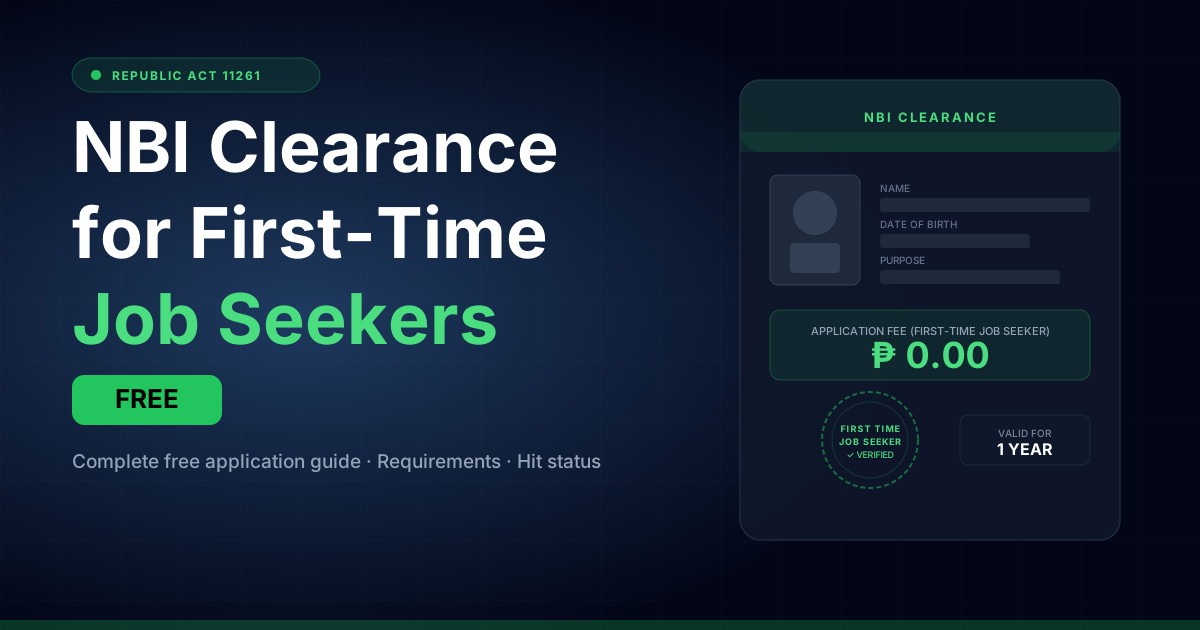
Yes. Under Republic Act 11261, also called the First Time Jobseekers Assistance Act, first-time job seekers can get their NBI Clearance for free. The regular fee is PHP 130 in 2026, so this is a real benefit worth using.
But there is one condition. You only get this once. If you apply again next year or for a different employer, the fee applies. So make sure you use this benefit at the right time.
Quick facts:
- Fee: PHP 0 for first-time job seekers (regular fee is PHP 130)
- One-time benefit only
- Must select "First-Time Job Seeker" during online application
- Applies to local and overseas employment applications
Who Qualifies as a First-Time Job Seeker?
The law covers applicants who have never been formally employed before. Fresh graduates, school leavers, and people looking for their first job all qualify.
There is no strict age limit. What matters is your employment history. If you have worked before under an employment contract, you no longer qualify. Freelance or informal work is a grey area, but the Barangay Certificate you submit will confirm your status to the NBI.
You qualify if you:
- Have never held a formal job
- Are applying for employment for the first time
- Can get a Barangay Certificate confirming your first-time job seeker status
- Are applying within the Philippines (OFW applicants follow a different process)
NBI First Time Job Seeker Requirements
Get this part right before you book your appointment. Missing even one document will cost you a wasted trip to the NBI branch. The requirements are not complicated, but the Barangay Certificate is the one people forget most often.
Primary Documents You Must Bring
- Barangay Certificate stating you are a first-time job seeker. This must be dated within six months of your application. Go to your barangay hall and specifically request a certificate for first-time job seeker purposes. It is either free or costs a small fee depending on your barangay. This is the most important document.
- One valid government-issued ID. The NBI accepts passports, driver's licenses, UMID, PhilHealth ID, SSS/GSIS ID, postal ID, PRC ID, or voter's ID. A school ID alone is not enough as your primary ID.
What Is the First-Time Job Seeker Certificate?
A lot of people search for "certificate of first-time job seeker" thinking it is a separate form from the NBI or another government office. It is not. The Barangay Certificate is the certificate. You get it from your local barangay hall, not from NBI.
Supporting Documents (Only for Hit Cases)
These are not required upfront. You only need them if your application gets a Hit status.
- PSA Birth Certificate (certified copy)
- Police Clearance from your city or municipality
- School ID or any additional ID
- Employment records or school records if asked
Read more about what NBI Hit status means in the dedicated section below. It is not something to worry about until it happens.
Valid IDs Accepted by NBI in 2026
This question comes up constantly. Here is the current accepted list for NBI valid IDs:
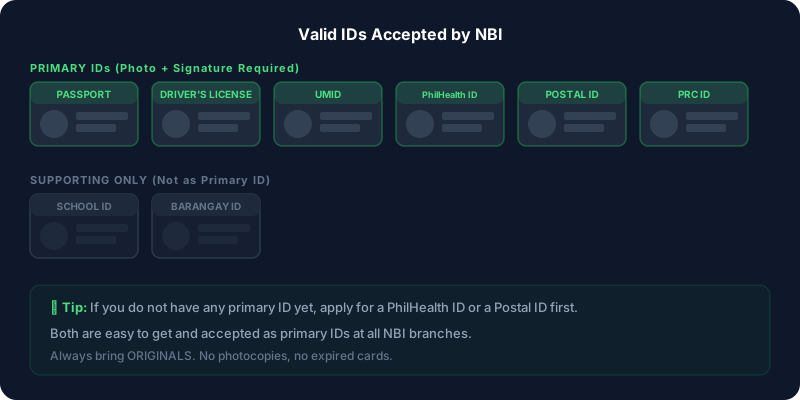
| ID Type | Accepted as Primary ID |
|---|---|
| Passport | Yes |
| Driver's License | Yes |
| UMID | Yes |
| SSS/GSIS ID | Yes |
| PhilHealth ID | Yes |
| Postal ID | Yes |
| PRC ID | Yes |
| Voter's ID | Yes |
| School ID | No (supporting only) |
| Barangay ID | No (supporting only) |
If you do not have any of the IDs on this list yet, apply for a PhilHealth ID or a postal ID first. Both are relatively easy to get and accepted as primary IDs at the NBI.
How to Get NBI Clearance as a First-Time Job Seeker
The whole process happens online first, then you go to the NBI branch on your appointment date. Here is the exact process:
Step 1: Register Online
- Go to the NBI Clearance website
- Create an account using your email address
- Fill in your personal details accurately. Name spelling and birthdate are especially important. Check your ID before typing.
Step 2: Fill Out the Application Form
- Under the Purpose or Status section, select First-Time Job Seeker
- This is the step that triggers the fee waiver. If you skip this or select the wrong option, you will be charged the regular fee.
- Double-check everything before submitting.
Step 3: Choose a Branch and Book Your Appointment
- Pick an NBI centre near your home. This matters more than you think. If your application gets a Hit, you will need to return to the same branch.
- Book as early as possible. Slots in major cities fill up fast, especially between January and June, when fresh graduates flood the system.
- Save or screenshot your appointment confirmation.
For more detail on the booking process, see the complete NBI online appointment guide.
Step 4: Skip the Payment Step
- First-time job seekers skip the payment section entirely
- Your total should show PHP 0.00
- If the system still shows a charge, go back and recheck that you selected First-Time Job Seeker as your purpose
Step 5: Visit the NBI Branch
- Arrive 15 to 20 minutes before your appointment
- Bring your original documents, not photocopies
- You will go through biometrics: photo, fingerprint scan, and signature
- Staff will also record your identifying marks. This includes permanent moles, scars, and tattoos. If you have none, say so clearly. Do not leave it blank.
Step 6: Claim Your Clearance
- No issues found: you get your clearance the same day, usually within a few hours
- Hit status triggered: You will receive a claim stub with a return date. This is covered in full detail in the next section.
NBI Hit Status Explained: What First-Timers Really Need to Know
This is where most articles stop after one paragraph and leave you more anxious than before. Hit status is the number one thing first-time applicants panic about, and it deserves a proper explanation.
A Hit does not mean you have a criminal record. Read that again. It does not mean you have a criminal record.
The NBI system runs your name against its national database. If your name is similar or identical to someone who has a record, the system automatically flags it for manual review. That is it. The system cannot tell you apart from someone else with the same name, so it raises a flag and lets human staff sort it out.
Common Filipino surnames like Garcia, Reyes, Santos, Cruz, and Dela Cruz get flagged all the time precisely because thousands of people share those names. Being flagged means your name is common. Nothing more.
How the System Flags a Hit
The NBI database checks your full name against its records. It is a name-match system, not a biometric match at this stage. So if Juan Santos with your birthdate has a record, and you are also Juan Santos born the same year, the system flags both of you.
It is automated. No staff member decided you look suspicious. The computer matched a string of text. That is all that happened.
What Happens During Hit Verification
Once flagged, NBI staff manually review your case. They compare:
- Your biometrics (fingerprints captured during your appointment)
- Your physical details and identifying marks
- Your supporting documents against the flagged record
The staff are comparing you to the person in the database. If your fingerprints do not match the record, your case is cleared. This process happens internally. You do not attend a hearing. You do not need a lawyer. You just wait for the return date on your stub and go back to collect your clearance.
If there IS a confirmed match to an actual record, a different legal process begins. But this is genuinely rare for first-time job seekers with no employment history and no prior legal issues.
How Long Does Hit Status Take?
Under normal conditions: 1 to 5 business days. During peak season (January through March, and graduation months like April to June), it can stretch to two weeks.
If your return date passes and nothing is ready, you can follow up at the branch directly. Bring your stub and ask the releasing counter for an update.
For more detail on every type of hit and what to do, read the dedicated NBI Clearance Hit Status guide.
What to Do If You Get a Hit
Stay calm. Follow these steps:
- Accept the claim stub from the staff
- Check the return date written on the stub
- Gather your supporting documents before that date: PSA Birth Certificate, Police Clearance, and any additional IDs
- Go back to the same branch on or after the return date
- Do not apply at a different branch. Your case is tied to the branch where you submitted your biometrics.
Documents to Bring If Your Application Gets a Hit
You do not need these at your first appointment. But if you get a Hit, prepare these before your return date.
- PSA Birth Certificate (certified copy from PSA, not a photocopy)
- Police Clearance from your city or municipality. This is a local document from your LGU, not the same as NBI Clearance.
- School ID or records, if available
- Two valid IDs, if possible
- Your original appointment stub
Bring the originals, not photocopies. The staff will verify everything.
Identifying Marks: A Small Detail That Causes Big Problems
During your biometrics session, NBI staff will ask about your identifying marks. Most first-timers either blank out or brush it off. Do not.
Identifying marks are permanent physical features. They are part of your NBI record and matter if your application ever gets a Hit or if your identity needs to be verified in the future.
What Counts as an Identifying Mark
- Moles visible on skin
- Scars (from surgery, accidents, or injuries)
- Permanent tattoos
- Birthmarks
Temporary things like acne, bruises, or skin conditions do not count. If you genuinely have no permanent marks, tell the staff "none." Do not leave it blank or say you are unsure.
Why Getting This Right Matters
Your NBI record stays on file. If you apply for NBI Clearance renewal next year and you now have a tattoo that was not recorded on your first application, it can create a mismatch in your biometric records and cause unnecessary delays. Accuracy now saves you headaches later.
How Long Does It Take to Get NBI Clearance?
Here is a realistic breakdown for 2026:
| Scenario | Expected Time |
|---|---|
| No Hit, appointment day | 2 to 4 hours at the branch |
| Hit status triggered, off-peak | 1 to 5 business days |
| Hit status triggered, peak season | 1 to 2 weeks |
| Actual record match found | Varies, legal process involved |
The NBI Clearance validity period is one year from the date of issue. If your employer asks for a clearance issued within a specific timeframe, for example, within the last six months, plan your application date accordingly.
Choosing the Right NBI Branch
Your branch choice is more important than people realise. If you get a Hit, you must return to the same branch for your clearance. Choosing a branch far from your home makes it inconvenient.
Pick the branch closest to your home address. Do not choose a branch just because it has earlier slots.
The NBI now has branches in major malls, regional offices, and standalone centres across the Philippines. Major Metro Manila branches include those inside Robinsons Mall locations, SM branches, and the main NBI office in Manila.
Tips for choosing a branch:
- Check slot availability for your preferred date first, then choose the branch
- Provincial branches are available and fully operational for NBI online appointment booking
- Avoid choosing the Manila main office if you are not in the area. It handles the highest volume.
- Mall-based branches tend to have faster processing and cleaner facilities
Common Mistakes That Slow Down Your NBI Application
These are avoidable. All of them.
Misspelling your own name. It sounds impossible but it happens more than you think. People use nicknames, skip middle names, or type too fast. Your name on the form must match your ID exactly.
Wrong birthdate. A typo in your birth year or month causes a mismatch in the system.
Forgetting the Barangay Certificate. You cannot get your free clearance without it. No exceptions. The NBI staff will not process your application without this document.
Using an expired ID. Check the expiry date of your ID before your appointment.
Bringing a photocopy instead of the original. Always bring original documents.
Panicking over Hit status and going to a different branch. This makes everything worse. Your biometrics are filed at your original branch. Starting over at a new branch means new biometrics and a new queue, and your original case still sits unresolved.
How to Reschedule If You Miss Your Appointment
Log back into the NBI portal and edit your appointment date from your booking history. You can reschedule once without issues. If you show up without rescheduling, your slot is lost and you need to book fresh.
NBI Clearance vs Police Clearance: Do You Need Both?
For most private sector jobs, you only need NBI Clearance. That is what employers ask for in their pre-employment requirements list.
Police Clearance comes up in two situations. First, some government job applications ask for both. Second, if your NBI application gets a Hit, you will need Police Clearance as a supporting document during verification.
They are not the same document. Police Clearance comes from your local government (city or municipality) and covers your record within that jurisdiction. NBI Clearance covers your national record.
NBI Clearance Renewal
Your clearance is valid for one year. When you apply for a new job after that year, you need a fresh clearance. The free first-timer benefit is already used, so you will pay the regular fee of PHP 130 at that point.
The renewal process is almost identical to the first application. You still book online, visit a branch, and go through biometrics. The only difference is that you will select a different purpose in the application form rather than First-Time Job Seeker.
2026 Tips for a Smooth NBI Clearance Experience
These come from actual patterns that cause delays. Not generic advice.
- Book at least one week ahead. Slots in Metro Manila branches fill up quickly. During graduation season (April to June), some branches are fully booked two weeks out.
- Get your Barangay Certificate first, before booking. If it expires before your appointment date, you will need a new one.
- Check your ID expiry date before booking, not on the morning of your appointment.
- Download your appointment confirmation to your phone. Do not rely on the email alone.
- Dress neatly. Not a formal requirement, but your clearance photo is taken at the branch, and it is on an official government document. Look decent.
- Do not share your NBI reference number on social media. It is a government document reference. Keep it private.
- If you have a common Filipino surname, expect the possibility of Hit status. It is not a bad sign. Prepare your PSA Birth Certificate in advance just in case.
Frequently Asked Questions
Can I apply for NBI Clearance as a first-time job seeker without booking an appointment first?
No. The NBI online appointment is required before you can visit any branch. Walk-ins are not accepted under the current system.
How many times can I use the free NBI Clearance benefit?
Once. The first-time job seeker fee waiver is a one-time benefit under Republic Act 11261. Your second application, regardless of the reason, will require the standard PHP 130 fee.
Does Hit status mean I have a criminal record?
No. Hit status is an automatic flag triggered by name similarity in the NBI database. The system cannot differentiate between people with the same or similar names until fingerprints are manually verified. Read the full NBI Hit Status guide for a complete explanation.
Is NBI Clearance required for online or work-from-home jobs?
Yes, for formal employment. If a company is hiring you under an employment contract, whether the work is remote or on-site, they can and often do require NBI Clearance. BPOs, digital agencies, and remote companies listed in the Philippines almost always include it in their pre-employment requirements.
What if I do not have a government-issued ID yet?
Apply for a PhilHealth ID or a postal ID first. Both are accessible to most Filipinos and are accepted as primary IDs at the NBI.
Can I choose any NBI branch, or does it have to be near my home?
You can technically choose any branch. But if your application triggers a Hit, you must return to the same branch where you submitted your biometrics.
How long does my NBI Clearance stay valid for job applications?
NBI Clearance is valid for one year from the date of issue. Some employers specifically request a clearance issued within the last six months, so check your employer's requirements before applying.
Ready to get started? Book your NBI appointment online today — the process takes under 15 minutes.