
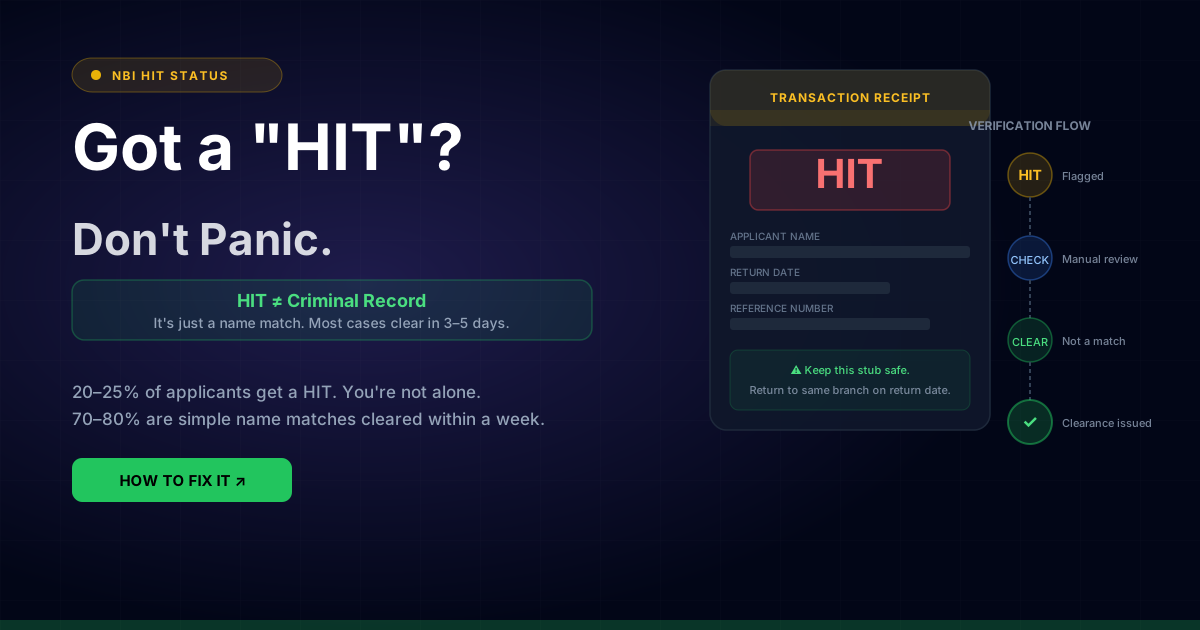
After paying the processing fees, giving out your fingerprints, waiting, and getting back a receipt that read "HIT", you became worried and even confused as you had several questions floating around your head now.
That's perfectly normal, because most individuals who encounter the status hit in their NBI clearance application for the first time will take it as something terrible or negative, like a criminal case or an indication that there's a black mark on their records, which could cost them in job applications and travel plans. In reality, however, a hit is nothing like that at all.
First off, a hit doesn't automatically translate to a criminal record against you. What it simply means is that NBI had a name matching yours in their database, but a human confirmation is needed to ascertain whether it really is you or not. This particular guide deals with hits only.
What Is a Hit in NBI Clearance?
The NBI clearance system runs an automatic check the moment you submit your application. It compares your name, birthdate, and other personal details against a large national database of records, including pending cases, criminal cases, old applications with flags, and unresolved legal matters.
When the system finds a name or set of details that closely resembles yours, it raises a flag. That flag is the hit. The system is not confirming you have a case. It is telling the officer, "This name looks like something in our records. Check it manually before releasing the clearance."
Key things to understand right away:
- A hit is a name match, not an identity confirmation
- The record could belong to someone else entirely
- Most hits are resolved without any issue
- Your clearance is simply placed on hold until verification is done
This is what hit in NBI means at its core: a pause, not a verdict.
Why Did You Get a Hit on Your NBI Clearance?
About 20 to 25 percent of all NBI clearance applicants in 2026 receive a hit. So if it happened to you, you are far from alone. There are several reasons the system flags an application, and most of them have nothing to do with actual wrongdoing.
You Have a Very Common Name
This is the single biggest reason for a hit, and it accounts for roughly 70 to 80 percent of all cases. Surnames like Santos, Cruz, Reyes, Garcia, and dela Cruz appear in the NBI database thousands of times. Pair one of those with a common first name like Maria, Juan, Jose, or Ana, and the system almost always finds a match.
Even less common surnames can trigger a hit when combined with matching birthdate details or a shared middle initial. The system is not smart enough to know you are a different person. It sees similar data points and flags them.
Your Name Has Been Recorded Differently
Old government records were not always consistent. Your name might appear with a shortened middle name in one document and a full middle name in another. Compound surnames get written differently depending on where and when the record was created. Maiden names, married names, and nicknames all create variations that the system treats as potential matches.
Some specific examples that cause this:
- The middle name is written as an initial only in an old record
- Surname hyphenated in one document but not another
- Nickname used in a previous application instead of the legal name
- Different spelling on an old passport versus your National ID
A Past Case Is Still in the System
If you were ever involved in any legal matter, even one that was dismissed, settled, or resolved years ago, there is a chance the record is still in the NBI database. Court outcomes do not automatically update the NBI system. Unless the court formally sent the dismissal order to NBI and someone updated the record, the old case still shows up when your name is searched.
This includes:
- Criminal cases that ended in acquittal
- Cases where you were a complainant or witness, not the accused
- Civil cases that were incorrectly tagged as criminal
- Old arrest records where no charges were filed
Data Entry Errors from Old Records
Clerical mistakes from older applications or legacy government records are more common than most people expect. Wrong birthdates, misspelled names, transposed letters — these create false matches that have no connection to any real case. The NBI database contains records going back decades, and some of those records are incomplete or inaccurate.
Step by Step: How to Clear Your NBI Hit Status
This is the exact process to follow. No shortcuts, no fixers, just the correct steps.
- Read your hit notice. It tells you what to bring and when to return. Do not ignore the date printed on it.
- Gather your documents before your return visit. Going unprepared wastes a trip.
- Return to the same branch where you applied. Switching branches resets everything.
- Submit documents at the verification window, not the regular application counter. Ask staff where to go if unsure.
- Wait for the verification period based on your hit type. Refer to the table below for expected timelines.
- Claim your clearance once you receive a notification or when your return date arrives. Bring your claim stub and a valid ID to the claiming window.
For first-time applicants, the process can feel overwhelming. If you are applying for work purposes, check the NBI clearance for first-time job seekers guide for additional context on what documents to prepare from the start.
Types of NBI Hit Status and What Each One Means
Not all hits are the same. The NBI system recognizes different categories depending on the nature of the match, and each one has a different resolution timeline.
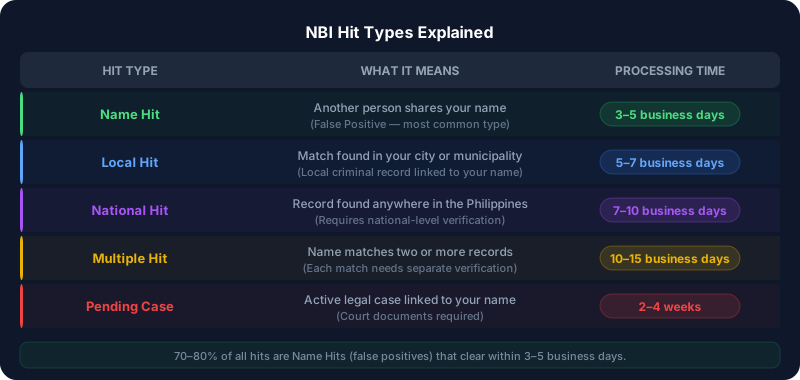
| Hit Type | What It Means | Typical Processing Time |
|---|---|---|
| Name Hit (False Positive) | Another person shares your name | 3 to 5 business days |
| Local Hit | Match found in your city or municipality | 5 to 7 business days |
| National Hit | Record found anywhere in the Philippines | 7 to 10 business days |
| Multiple Hit | Name matches two or more records | 10 to 15 business days |
| Pending Case Hit | Active legal case linked to your name | 2 to 4 weeks |
Name Hit
This is the most common type. Someone else in the country shares your name and has a record. NBI staff compare your birth details against the case details to confirm you are a different person. Most name hits are cleared within a week.
Pending Case Hit
This one requires more work. If the system finds an actual ongoing case connected to your name, the NBI will need official documents from the court before they can release your clearance. This is where having court papers ready makes a real difference.
How the NBI Hit System Actually Works
When you submit your biometrics at an NBI clearance branch, the system immediately runs an automated check. It scans your fingerprints through the Automated Fingerprint Identification System (AFIS) and simultaneously checks your personal details against the national criminal database.
The system looks for:
- Exact or similar full names, including first, middle, and last name
- Matching or near-matching birthdates and birthplaces
- Fingerprint matches in AFIS
- Existing criminal, pending, or flagged records
- Previous NBI application holds
If the automated check finds nothing, your clearance goes straight to processing. If it finds a possible match on any of those points, it raises a hit and holds the application for manual review. A trained NBI officer then takes over and compares your actual documents against the flagged record to decide whether they match.
That manual review is why there is a waiting period. The officer is not guessing. They are checking specific dates, addresses, physical descriptions, and case details to separate your identity from whoever triggered the flag.
What Happens After You Get a Hit
Getting a hit status in NBI clearance does not end your application. It just means it moves from an automated queue to a manual one. Here is the full timeline of what happens next:
Day 1: Your Appointment. The officer informs you of the hit at the counter. You receive your transaction receipt with a return date printed on it. Do not leave without that receipt. Do not rebook a new appointment.
Days 1 to 3: NBI personnel begin cross-checking your personal details against the matched record. This is internal work done at the branch or verification office.
Day 3 to 5: If the record clearly does not match you, your clearance is approved and ready for release. Return to the same NBI branch with your receipt and a valid ID.
Day 5 to 15: If the match is more complicated, such as a national hit or a pending case hit, the NBI may need to contact the relevant court for verification documents. You may be asked to submit additional paperwork during this period.
Days 15 to 30: Most complex cases reach a resolution by this point. If you have not received an update after 15 days, follow up directly with the branch where you applied.
One thing worth knowing: you cannot speed this up by visiting the office every day or calling repeatedly. The NBI hit how many days it takes depends entirely on the case type and how quickly supporting records can be confirmed.
How to Check If You Have a Hit Status
Most applicants find out about their hit on the day of their appointment. But if you want to check the status before or after:
- At the counter: The NBI cashier or encoder will tell you directly if your application was flagged
- On your receipt: The word "HIT" will appear on your transaction slip along with a return date
- Online portal: Log in to your NBI account and check under "Transactions." The status will show as "HIT" if flagged
- By phone: You can call the NBI processing center for a general status update, though in-person follow-up is more reliable
Always keep your transaction receipt safe. You need it when you return to the branch, and it has your reference number for any follow-up queries.
Documents You Need to Clear a Hit
The documents you need depend on the type of hit. Bring the wrong set and your visit will not accomplish much.
Always Required for Any Hit
These are the base documents you must bring every time:
- PSA-authenticated birth certificate (original copy, not a photocopy)
- Valid government-issued ID; original and one photocopy
- Your NBI hit notice or transaction receipt
- Accomplished verification form (provided at the NBI branch)
For a Past or Dismissed Case
If your hit is linked to an old legal matter, bring:
- Certified true copy of the court dismissal or acquittal order
- Police clearance from your current city or municipality
- Barangay clearance if the case address matches your current address
For Identity Theft or Mistaken Identity
If someone used your name in a criminal case:
- Notarized Affidavit of Denial
- Notarized Affidavit of Discrepancy if there are document inconsistencies
- Police report if you formally filed an identity theft complaint
- Supporting records proving your whereabouts during the relevant period: employment records, school records, or hospital records
How Long Does It Take to Clear a Hit?
| Hit Type | Expected Clearance Time |
|---|---|
| False positive (name only) | 3 to 5 business days |
| Local hit | 5 to 7 business days |
| National hit | 7 to 10 business days |
| Multiple hits | 10 to 15 business days |
| Pending case hit | 2 to 4 weeks |
| Complex or unresolved case | 30 days or more |
The NBI hit how many days question is one of the most common concerns. The short answer is that a simple name hit usually resolves within one working week. Court-related hits take longer because the NBI cannot act until the court responds.
If your clearance has not been released after 15 business days and you have already submitted complete documents, visit the branch and request a supervisor review. Bring every document you submitted previously.
What If Your Hit Cannot Be Cleared?
In rare cases, the verification process cannot reach a clean resolution. Here is what that looks like and what you can do:
You Actually Have an Active Case
If the NBI confirms the record belongs to you and the case is still active, they cannot issue clearance. You must resolve the legal matter through the court system before reapplying. A lawyer can advise you on the fastest legal route depending on the nature of the case.
Court Documents Are Unavailable or Delayed
Some courts, particularly in provincial areas, take weeks to respond to NBI document requests. If this is causing the delay, you can go to the court directly to request a certified copy of the relevant order and submit it to NBI yourself. This almost always speeds things up.
You Are a Victim of Identity Theft
This situation is more serious but still fixable. File a police report immediately if someone used your identity in a criminal matter. Bring the police report, a notarized Affidavit of Denial, and any identity documents to the NBI helpdesk. Ask to speak with a supervisor and bring everything in a properly labeled folder.
Tips to Avoid a Hit on Future Applications
You cannot prevent a name hit entirely, especially if you have a common Filipino name. But you can reduce how often it happens and how long it takes to resolve when it does.
- Always use your full legal name exactly as it appears on your PSA birth certificate, not a nickname or shortened version
- Include your full middle name, not just the initial
- Make sure your birthdate and birthplace match your PSA record exactly
- Keep a copy of your most recent cleared NBI clearance and bring it to every future application
- If you have been flagged multiple times, ask the NBI officer about filing an Affidavit of Identity to help speed up future verifications
- Never create a duplicate NBI account online, as it causes data inconsistencies that flag your name
For the smoothest experience, book your NBI online appointment early, especially if you are applying before a job deadline or a travel requirement.
Frequently Asked Questions
Is a hit permanent on my NBI record?
No. A hit is a temporary name-match flag. Once the NBI confirms the record does not belong to you, the flag is cleared and does not appear on your final clearance document.
Can I still get a job with a hit status?
A receipt showing "HIT" status is not accepted in place of the released clearance. Wait for the clearance to be officially issued before submitting it for employment purposes.
Will NBI notify me when I am cleared?
There is no automated text or email notification. You need to return to the branch on the date given to you, or monitor your status through your NBI online account.
Can I check my NBI hit status online?
You can view your application status through your NBI online portal account. In-person follow-up at the same branch remains the most reliable way to get accurate updates.
What if I get a hit every time I apply?
Ask the NBI officer about filing an Affidavit of Identity at your branch. Always bring your previously cleared NBI clearance when you reapply.
What happens if I ignore the hit and do not return?
Your application is automatically canceled after 30 days. You lose the application fee and must restart the entire process.
Is a cleared NBI clearance different from a regular one?
No. Once cleared, your NBI clearance looks and works exactly the same as one with no hit. It is valid for one year from the date of issue and accepted for all purposes.
Can I go to a different NBI branch to resolve my hit?
No. You must return to the same branch where you originally applied. Going to a different branch will not resolve your hit, and the officer there will not have access to your application file.
Still have questions about the NBI process? Visit the NBI Clearance homepage for the complete guide, or see the first-time job seekers guide if this is your first application.